“Audio engineer” is one of those job titles that sounds straightforward until you try to define it.
Some audio engineers record bands. Some mix songs they never recorded. Some specialise entirely in mastering. Others work in film, television, live sound, podcasts, audiobooks or sound design.
The title describes someone who works professionally with sound, but it does not automatically tell you which part of the process they handle—or whether they are the right person for your project.
For an artist, understanding the different engineering roles can save time, prevent misunderstandings and help you choose someone with the right experience for the stage your music has reached.
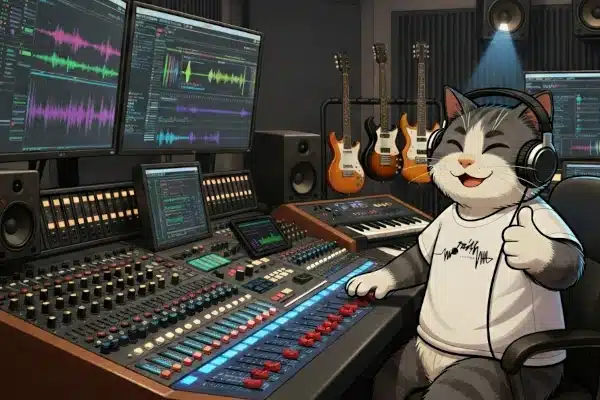
An audio engineer uses technical knowledge, critical listening and practical experience to capture, shape or prepare sound.
That may involve:
However, no single engineer necessarily performs all of these tasks.
A recording engineer, mixing engineer and mastering engineer may all work on the same song, but they are making very different decisions at different stages.
The confusion often begins when people assume that being skilled in one area automatically makes someone equally skilled in every other area. There can be overlap, but each discipline requires its own listening habits, workflow and experience.
The Audio Engineering Society is also a useful resource for broader information about professional audio, engineering research and technical standards.
A recording engineer is responsible for capturing the performance.
That sounds simple, but there is much more involved than pressing record.
Before the session begins, the engineer may need to consider:
During the recording, the engineer is listening for technical problems while also protecting the momentum of the performance.
A microphone may need to move slightly. A headphone mix may be distracting the singer. A guitar amplifier may sound bright in the room but harsh through the microphone. A drum resonance may become a problem once the full kit is recorded.
These decisions often need to be made quickly.
A good recording engineer does not simply document what happens in the room. They create the conditions that allow the performance to be captured clearly, naturally and with the right emotional character.
They also need to know when not to interrupt. Stopping an artist after every small imperfection can destroy the confidence and energy that made the take valuable in the first place.
Once the recordings are complete, the mixing engineer turns the collection of individual tracks into a finished stereo mix.
Their role is not simply to make every instrument audible.
A strong mix needs balance, depth, movement and a clear emotional focus. The mixing engineer decides how the different elements should relate to one another throughout the song.
That may involve:
The most important part of mixing is often deciding what should lead and what should support.
A vocal may need to feel intimate in the verse and more commanding in the chorus. The drums may need to become more aggressive without simply getting louder. A guitar layer may sound impressive on its own but compete with the emotion of the lead vocal.
Mixing is a continuous process of choosing priorities.
The engineer also needs an accurate room and monitoring system so those decisions translate beyond the studio. A mix that only works on one pair of speakers is not truly finished.
Mastering is the final stage before release.
The mastering engineer works with the completed stereo mix—or, in some cases, a small collection of grouped stems—and prepares it for consistent playback and final delivery.
This may involve:
Mastering should not feel like a completely different production.
Its purpose is to help the finished mix translate reliably, sit confidently beside other professional releases and retain its character across different playback systems.
A mastering engineer listens from a different perspective to a mixing engineer. Rather than adjusting individual instruments, they are judging the whole song and, where relevant, its relationship to the rest of the release.
This is why mastering is not simply putting a limiter on the mix and making it louder.
Not necessarily.
A music producer is usually responsible for the broader creative direction of a recording.
The producer may help shape:
The engineer is traditionally responsible for the technical execution of those ideas.
In practice, the roles frequently overlap. An experienced engineer may contribute production ideas, and a producer may also handle recording or mixing.
That does not make the titles interchangeable.
Someone can be an excellent recording engineer without wanting to restructure your song. Someone can have strong production instincts without being a specialist mastering engineer.
At Moreish Studios, my work often moves between technical and creative roles because the needs of independent artists rarely fit into perfectly separated boxes. What matters is being clear about which role is required at each moment.
These tasks may be handled by the recording engineer, producer, mixing engineer or a dedicated editor, depending on the project.
They can include:
It is important to establish whether this work is included before the project begins.
“Mixing” does not always include extensive performance editing, just as “recording” does not automatically include vocal tuning or arrangement changes.
Clear expectations protect both the artist and the engineer.
A live sound engineer works in a completely different environment from a studio engineer.
They need to manage sound reinforcement in real time, often while dealing with changing room acoustics, stage volume, feedback risk and an audience.
A studio engineer has more opportunity to refine microphone choices, edit performances and make detailed decisions over time.
Some engineers work confidently in both areas, but experience in one does not automatically guarantee expertise in the other.
The pressure, workflow and listening priorities are different.
For a broader occupational overview of sound engineering roles, the U.S. Bureau of Labor Statistics provides additional information about the work performed across sound, broadcast and technical audio environments.
Independent artists often work with one person across recording, production, mixing and sometimes mastering.
This can have genuine advantages.
A single engineer may understand the project from the first demo through to final delivery. They know which sounds were intentional, how the performances developed and what the artist is trying to communicate.
Continuity can make the process faster and more cohesive.
However, the engineer still needs the experience, monitoring and perspective required for each stage. Owning mixing plugins does not automatically make someone a mixing engineer, and placing a limiter on the stereo output does not make someone a mastering engineer.
The question is not whether one person performs several roles.
The question is whether they can perform each role at the level the project requires.
Start by identifying what you actually need.
Are you looking for someone to:
Then look beyond the equipment list.
Listen to previous work. Ask about the engineer’s experience in the relevant discipline. Find out how they communicate, what is included and how they approach revisions.
For recording, the room, equipment and ability to work with performers matter.
For mixing, monitoring accuracy, judgement and translation matter.
For mastering, a dedicated listening environment, quality control and experience preparing releases matter.
The right engineer is not simply the person who claims to do everything. It is the person whose skills match the decisions your project needs next.
A professional engineer can solve many problems, but no stage of the process is unlimited.
Mixing cannot fully replace a weak performance. Mastering cannot completely rebuild an unfinished mix. Expensive microphones cannot make an unprepared singer feel confident.
The best results come when every stage supports the next.
Preparation improves recording. Strong recording gives mixing more possibilities. A finished mix gives mastering something meaningful to refine.
Audio engineering is powerful because it brings experience and clarity to those stages—not because it provides a magical repair button at the end.
An audio engineer is not simply someone who operates recording software or owns professional equipment.
Their real job is to make reliable decisions about sound.
A recording engineer captures the performance. A mixing engineer shapes the relationship between the tracks. A mastering engineer prepares the finished music for release. A producer guides the wider creative direction.
Sometimes one person performs several of these roles. Sometimes the best result comes from a team of specialists.
What matters is understanding which decisions need to be made, and choosing someone with the listening skills, experience and environment to make them properly.
At Moreish Studios, we work across recording, music production, mixing and mastering while keeping the purpose of each stage clear. That allows the music to move through the process without losing the artist’s original intention.
To discuss which kind of audio engineering your project needs, get in touch with Moreish Studios.