When artists book time at a Recording Studio, one of the most common points of confusion is the difference between a music producer and a recording engineer. The roles are often spoken about interchangeably — but they’re not the same thing.
Understanding the distinction isn’t about job titles. It’s about knowing what kind of support your project actually needs, and how a Music Production Studio fits into that process.
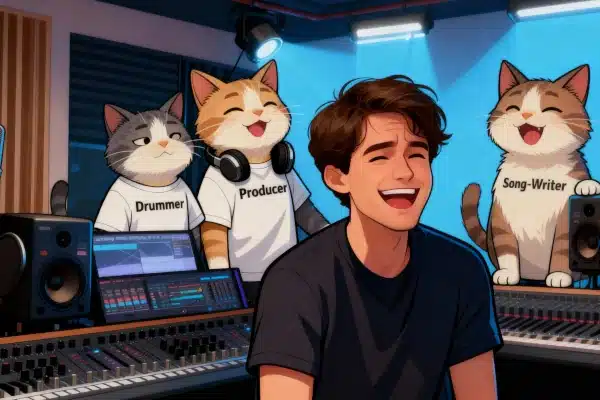
A recording engineer focuses on how your music sounds.
A music producer focuses on what your music becomes.
In modern studios, those roles often overlap — but their core responsibilities are very different.
A recording engineer is responsible for the technical side of your session. Their job is to capture sound accurately, cleanly, and consistently.
This includes:
In a professional Recording Studio, the engineer makes sure nothing gets in the way of the performance. You don’t have to think about levels, noise, phase, or technical issues — that’s their world.
A great engineer allows artists to stay focused on playing, singing, or creating without distraction.
A Music Producer works at a broader creative level. Their role is to help shape the song itself — not just capture it.
This can involve:
A producer isn’t there to impose ideas — they’re there to help translate intention into sound.
In a Music Production Studio, the producer acts as a creative partner, helping guide the project from concept to completion.
Many contemporary studios blur the line between producer and engineer — and this is usually a good thing.
With modern workflows:
In practice, what matters isn’t the label — it’s whether the studio provides the right balance of technical accuracy and creative guidance.
At a high level, a Recording Studio should remove uncertainty, not add to it.
That depends on your project.
You may only need a recording engineer if:
You’ll likely benefit from a music producer if:
Many artists need both — and that’s where a Music Production Studio really earns its value.
From an artist’s perspective, the most important thing isn’t whether someone is called a “producer” or an “engineer”.
The important questions are:
A professional Recording Studio should be clear about how those roles are handled — and tailor the process to your project, not force you into a rigid structure.
In modern music production, results matter more than roles.
The best studios operate collaboratively, adapting to what the artist needs in the moment. Sometimes that’s purely technical support. Other times it’s creative direction. Often it’s both.
Understanding the difference between a Music Producer and a recording engineer helps you communicate better — but it shouldn’t be a barrier to starting.
You don’t need to fully understand every studio role before booking time. What you do need is a studio that understands your goals and knows how to support them.
A great Recording Studio doesn’t just record sound — it helps turn ideas into finished music.
At Moreish Studios, we tailor each session to the artist and the project, providing the right balance of technical precision and creative input so nothing gets in the way of the music.
Learn more about Recording or explore Music Production. If you’d like to talk through your project, get in touch.